A Marvel of Ancient Engineering
The Pantheon stands as the most complete surviving building from ancient Rome and one of the most influential buildings in Western architecture. Originally built as a temple to all Roman gods (the name comes from Greek "pan" meaning "all" and "theos" meaning "gods"), it was converted to a Christian church in 609 AD, which saved it from the destruction that befell other Roman temples.
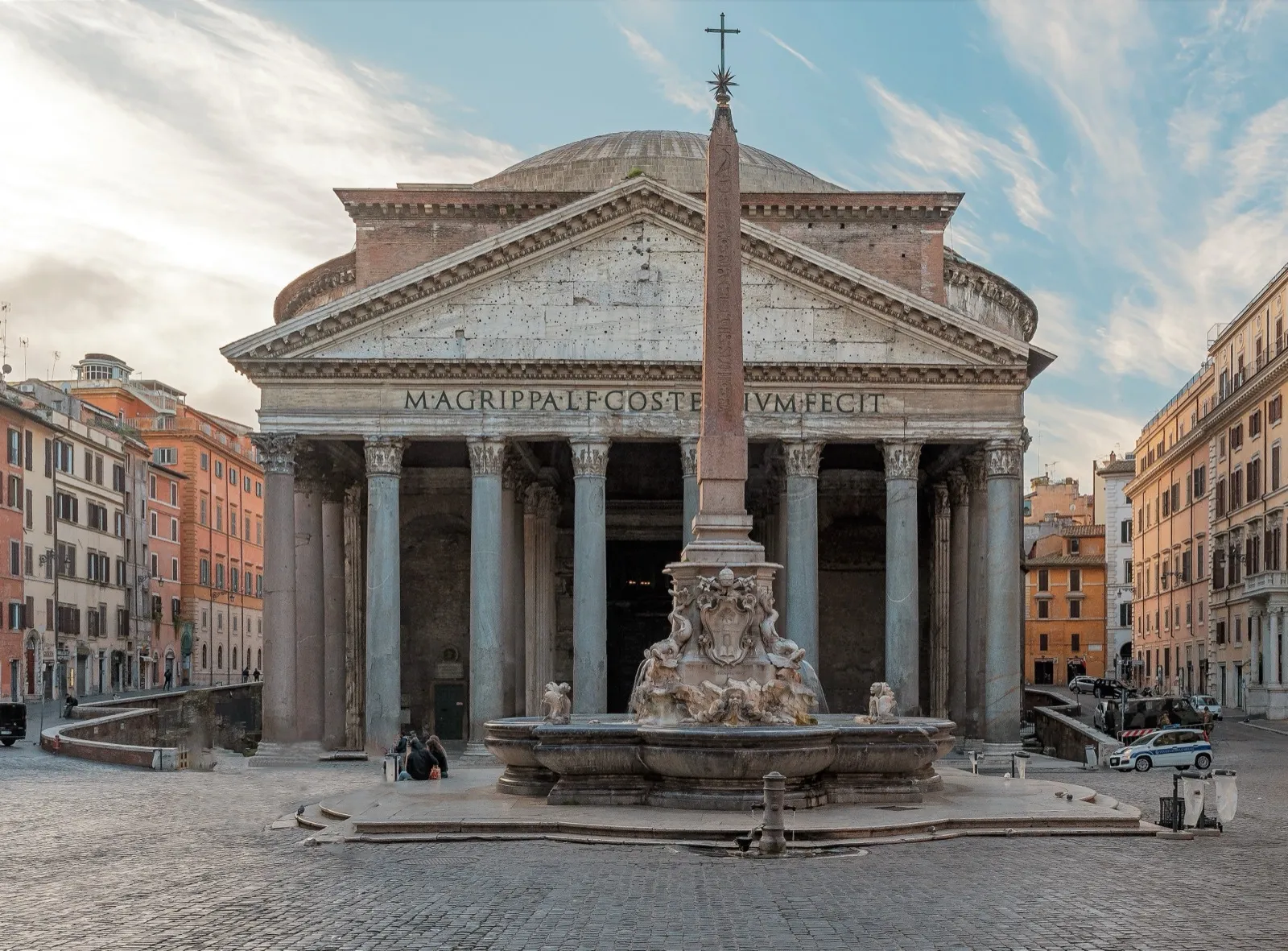
The current building was constructed during the reign of Emperor Hadrian around 126 AD, replacing an earlier temple built by Marcus Agrippa in 27 BC. The inscription on the facade, "M.AGRIPPA.L.F.COS.TERTIUM.FECIT" (Marcus Agrippa, son of Lucius, made [this building] when consul for the third time), refers to the original building.
The Incredible Dome
The Pantheon's dome remains the world's largest unreinforced concrete dome to this day - nearly 2,000 years after its construction. The dome is a perfect hemisphere with a diameter of 43.3 meters, exactly equal to the building's height. This perfect proportion creates a sphere that could fit precisely inside the building.
The Oculus
At the dome's apex is the oculus, a 9-meter circular opening that is the building's only source of natural light. As the sun moves across the sky, a dramatic beam of light moves across the interior, creating an almost supernatural effect. When it rains, water falls through the oculus but drains through 22 holes in the marble floor.
Engineering Genius
The dome was built using a revolutionary technique. The concrete becomes progressively lighter toward the top - heavy basalt and travertine at the base, transitioning to lighter tuff and pumice near the oculus. Coffers (the recessed panels) both decorate and reduce weight. This technique was so advanced that it wouldn't be equaled until the Renaissance.
Notable Tombs
The Pantheon serves as a mausoleum for several important figures. Most notably, it contains the tomb of the Renaissance master Raphael, who requested burial here. The inscription above his tomb reads "Here lies Raphael, by whom Nature herself feared to be outdone while he lived, and when he died, feared that she herself would die."
The building also houses the tombs of Italian kings Vittorio Emanuele II and Umberto I, making it both an artistic and political monument.
Visiting the Pantheon
New Reservation System: As of 2023, visitors must book a timed entrance and pay a small fee (5 euros). The revenue supports restoration and conservation efforts.
Best Time: Visit around midday when the sun is directly overhead, sending a dramatic beam of light through the oculus. The effect is particularly stunning around noon on sunny days.
Mass Schedule: The Pantheon is an active Catholic church. Mass is held on Sundays and Holy Days, during which tourism is suspended.