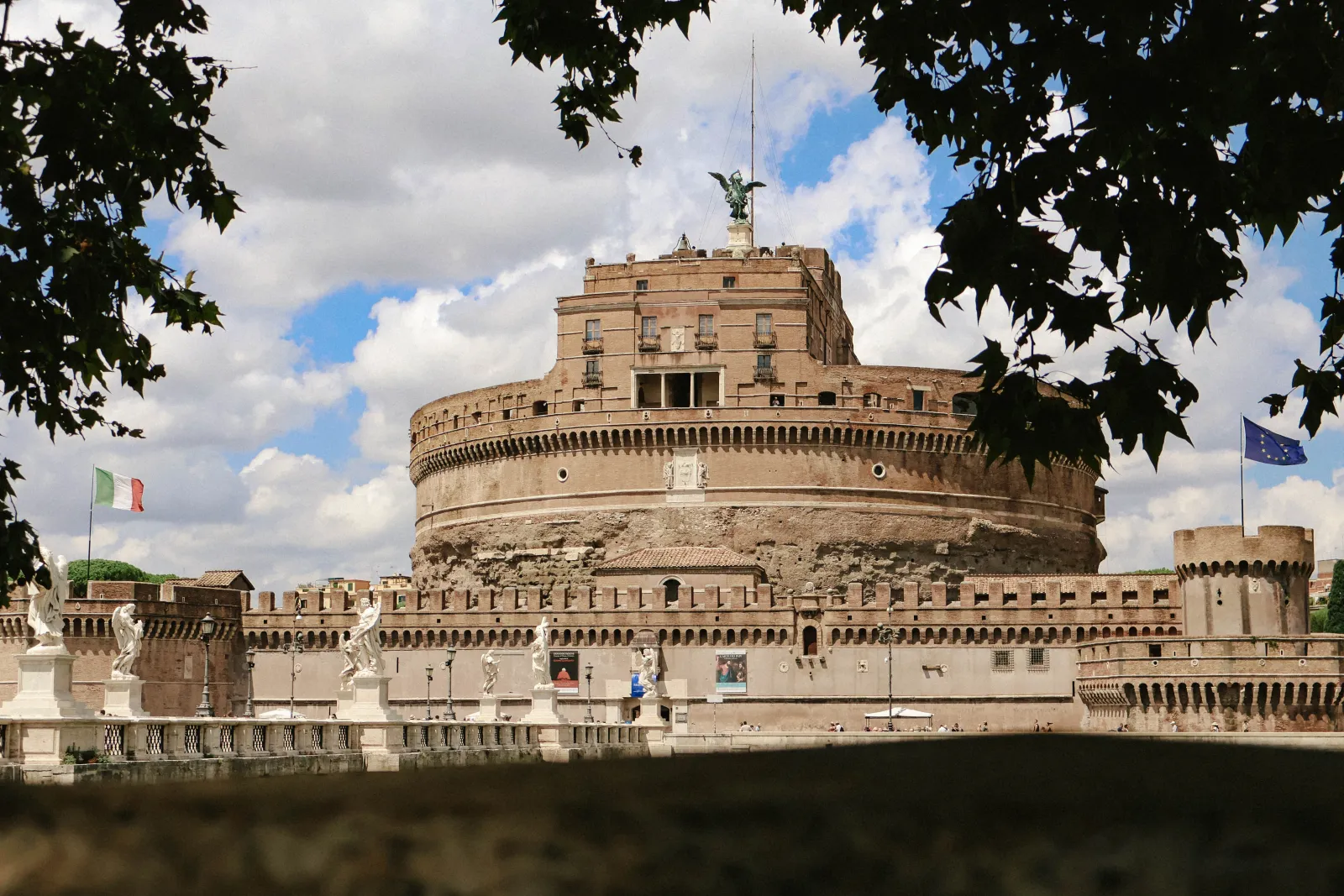
From imperial mausoleum to papal fortress. This iconic cylindrical castle has dominated Rome's skyline for nearly 2,000 years, offering breathtaking views and layers of history.
Castel Sant'Angelo began as a mausoleum for Emperor Hadrian and his successors, completed in 139 AD. Over the centuries, it transformed into a military fortress, a prison, a papal residence, and now a museum. Its massive cylindrical structure, crowned with a bronze angel, is one of Rome's most recognizable landmarks.
The castle is connected to the Vatican by the Passetto di Borgo, a fortified corridor that allowed popes to escape to safety during attacks. Pope Clement VII famously used this passage during the Sack of Rome in 1527.
Explore five floors of history, from ancient burial chambers to lavish papal apartments
Descend into the original Roman structure. The spiral ramp used to carry funeral processions is remarkably preserved. The burial chamber once held the ashes of emperors.

Lavishly decorated rooms where popes lived and took refuge. Admire Renaissance frescoes, the Sala Paolina, and the loggia with stunning views designed by Pope Paul III.

Climb to the top for 360° panoramic views of Rome. See St. Peter's Basilica up close, the Tiber below, and the entire city spread before you. The bronze angel statue crowns the scene.
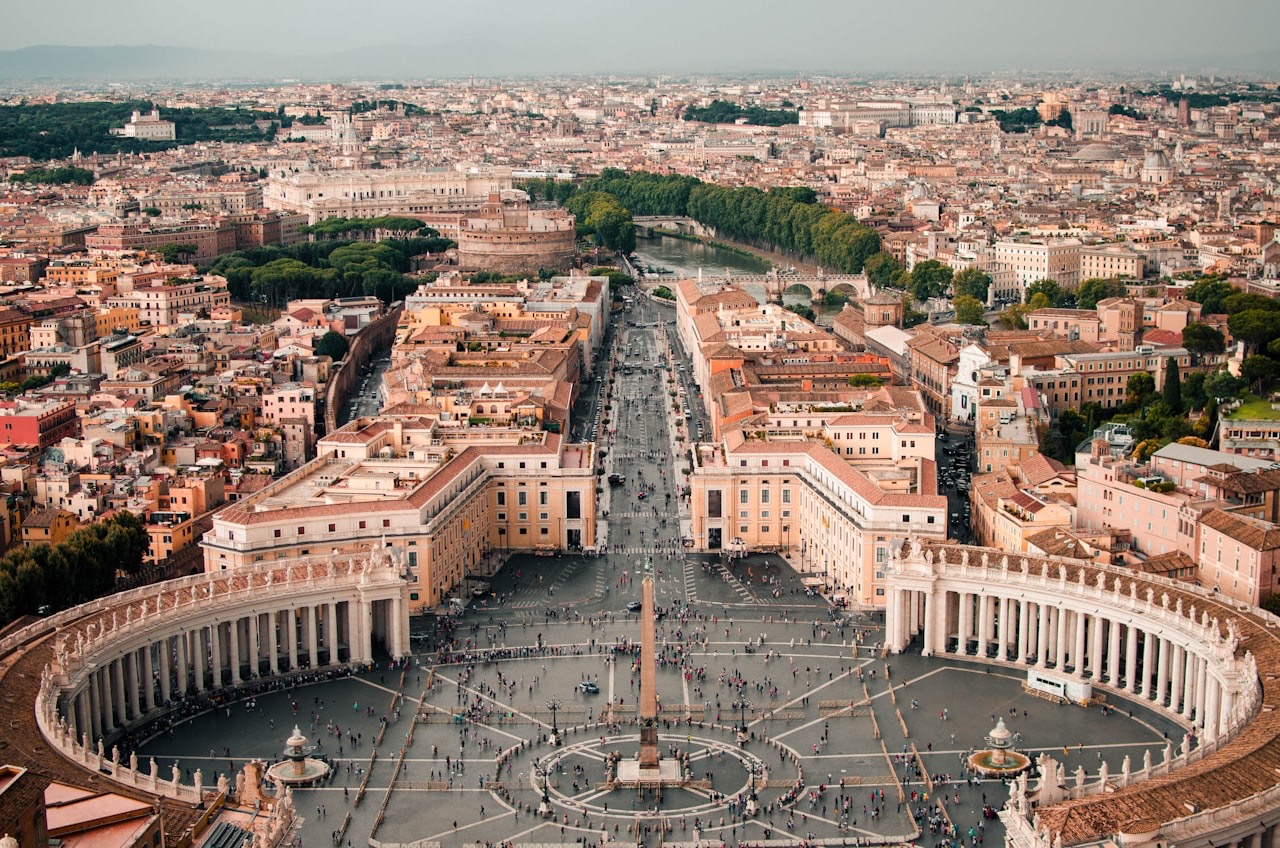
The pedestrian bridge leading to the castle is adorned with 10 angel statues designed by Gian Lorenzo Bernini in 1669. Each angel holds an instrument of Christ's Passion - the cross, the crown of thorns, the nails, the lance.
Walking across this bridge at sunset, with the castle glowing in golden light and the angels silhouetted against the sky, is one of Rome's most magical experiences. The bridge was originally built by Hadrian to connect his mausoleum to the city center.
From emperor's tomb to museum - the many transformations of this iconic fortress
Completed as a mausoleum for Emperor Hadrian and successive emperors until Caracalla in 217 AD.
Converted into a military fortress, incorporated into the Aurelian Walls to protect Rome from barbarian invasions.
Pope Gregory I saw Archangel Michael sheathing his sword, ending a plague. The castle was renamed and an angel statue added.
Opened as the National Museum of Castel Sant'Angelo, preserving its rich history for visitors to explore.
Combine Castel Sant'Angelo with St. Peter's Basilica and the Vatican Museums for the complete papal Rome experience.
Or call us: +393519898686
Castel Sant'Angelo is steps away from Rome's greatest treasures
From Hadrian's grand mausoleum to the papal refuge, Castel Sant'Angelo tells the story of Rome itself. Let our expert guides bring this history to life.