History of Villa Borghese
In 1605, Cardinal Scipione Borghese, nephew of Pope Paul V, began acquiring land on the Pincian Hill to create a suburban villa surrounded by extensive gardens. The project took decades, transforming vineyards into one of Rome's most magnificent estates. The cardinal amassed an extraordinary art collection, much of which remains in the Galleria Borghese today.
The original gardens featured elaborate fountains, aviaries, and a private zoo. The Villa Borghese became a template for Italian garden design, combining formal architecture with natural beauty. Throughout the centuries, various owners added features: the lake and Temple of Aesculapius arrived in the 18th century, while the Pincio redesign came in the early 19th century.
In 1903, the Italian state purchased Villa Borghese and opened it to the public. Today, it serves as Rome's most beloved park, hosting millions of visitors annually who come to escape the city's heat and traffic while enjoying world-class art, architecture, and nature.
The Pincio Promenade
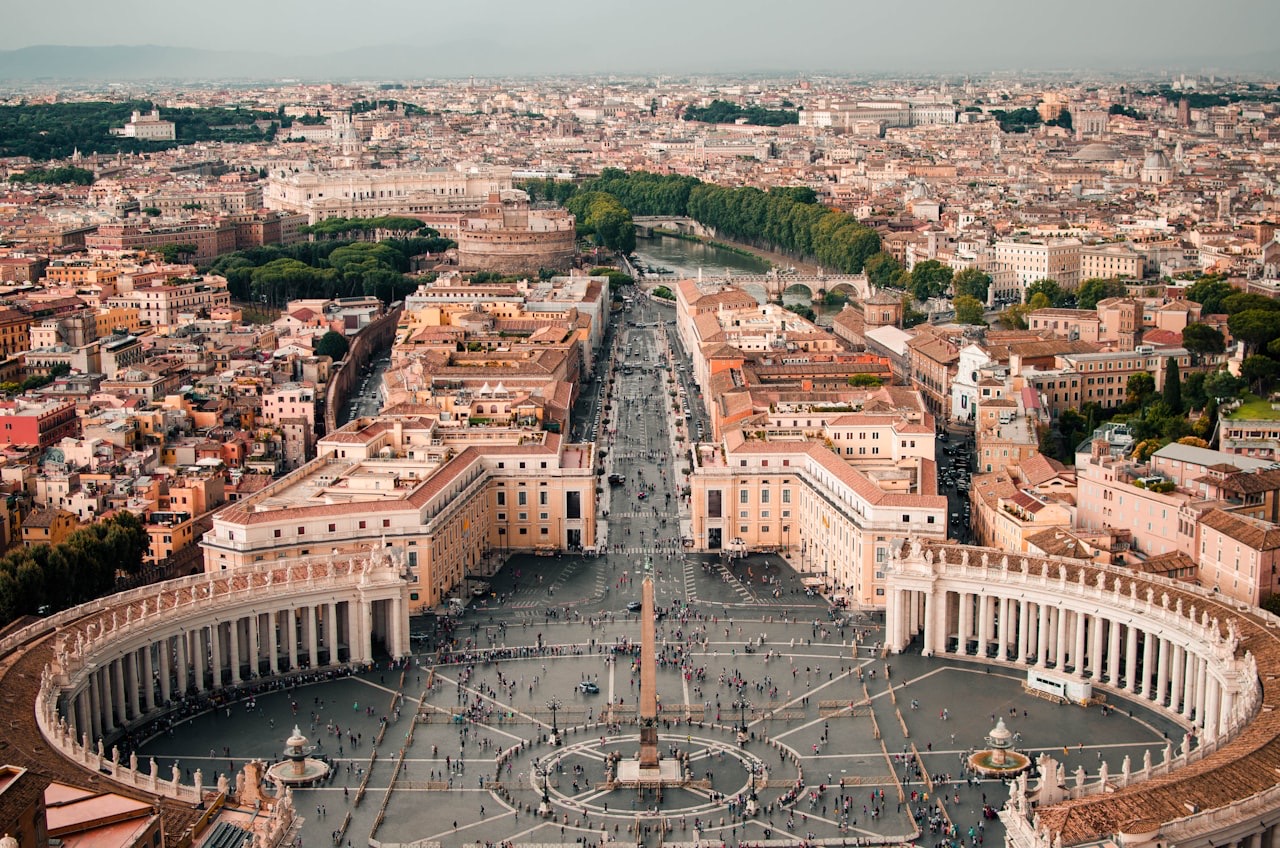
The Pincio, designed by Giuseppe Valadier in the early 1800s, offers Rome's most accessible panoramic viewpoint. The elegant terrace overlooks Piazza del Popolo and provides sweeping views across the historic center to St. Peter's dome. Romans have gathered here for sunset views for over 200 years.
The Pincio's balustrade features busts of famous Italians, creating an outdoor gallery of historical figures. The water clock (Orologio ad Acqua) on the hillside below was designed by Dominican friar Giovanni Embriaco in 1873 and still keeps time using water pressure. The sunset view from the Pincio remains one of Rome's most romantic experiences.
Activities in the Park
Villa Borghese caters to every interest. Cyclists and rollerbladers enjoy wide, tree-lined paths perfect for exercise. Several bike rental points offer standard bikes, tandems, pedal carts, and electric bikes. Families with young children gravitate to the playgrounds and Bioparco zoo.
The park hosts outdoor cinema screenings in summer, when Casa del Cinema projects films onto outdoor screens. The Globe Theatre presents Shakespeare and classical works in Italian from June through September. Musicians often perform in the gardens, and street artists create portraits near the Pincio.
Rowing boats on the lake offer romantic interludes, while joggers circuit the park's perimeter paths for workouts with views. Weekend markets sometimes set up near the Pincio, selling crafts, books, and antiques. Simply sitting on a bench with a book or gelato is a perfectly acceptable way to spend an afternoon in Villa Borghese.
Gardens and Landscaping
The park showcases three distinct landscaping styles. Italian gardens near the Galleria Borghese feature geometric patterns, carefully trimmed hedges, and formal symmetry. These gardens reflect Renaissance ideals of order and human control over nature.
English-style gardens, created in the 18th and 19th centuries, offer a contrast with natural-looking landscapes, winding paths, and romantic ruins. The Valley of the Lakes exemplifies this style with its artificial naturalness. French-influenced areas combine both approaches, adding perspective lines and grand vistas.
Throughout the park, over 200 tree species provide shade and habitat for wildlife. Stone pines create Rome's characteristic umbrella silhouette against the sky. Seasonal flowers add color: roses in spring, hydrangeas in summer, chrysanthemums in autumn. The combination creates ever-changing beauty throughout the year.
Museums and Culture
Beyond the famous Galleria Borghese, the park contains several other cultural institutions. The Galleria Nazionale d'Arte Moderna houses Italy's largest collection of 19th and 20th-century art, including works by Modigliani, De Chirico, and Klimt. The museum building itself, designed for the 1911 International Exhibition, is worth seeing.
The Etruscan Museum at Villa Giulia preserves pre-Roman antiquities in a beautiful Renaissance villa. Casa del Cinema, a restored cinema building, screens films and hosts exhibitions about cinematic history. The Carlo Bilotti Museum displays modern art in the Orangery building.
Best Times to Visit
Early morning visits (7-9 AM) offer peaceful walks before crowds arrive. The soft light is perfect for photography, and you might spot wildlife including ducks, turtles, and numerous bird species. Summer mornings are particularly pleasant before temperatures rise.
Late afternoon into early evening (5-8 PM) is magical, especially at the Pincio for sunset views. The golden hour illuminates the city beautifully, and the temperature cools. This is when Romans promenade, making it perfect for people-watching and soaking in local culture.
Spring (April-May) and autumn (September-October) offer ideal weather. Gardens bloom spectacularly in spring, while autumn colors transform the landscape. Winter has its charm too - fewer tourists, crisp air, and sometimes frost creating a different beauty. The park is open 24 hours, though most visitors come during daylight.
Getting There and Around
Villa Borghese has nine entrances, making access easy from various parts of Rome. The most popular entry points are via Veneto near the Galleria Borghese, Piazzale Flaminio near Piazza del Popolo, and Porta Pinciana at the top of Via Veneto.
Metro Line A stops at Flaminio (for the Piazzale Flaminio entrance) and Spagna (for access via the Spanish Steps and Pincio). From either station, it's a 5-10 minute walk to the park. Buses 490, 495, and 61 serve various park entrances.
The park is large enough that bike rental makes sense if you want to see everything. Walking is perfectly viable if you're selective about which areas to visit. Comfortable shoes are essential - paths are mostly paved but there's considerable ground to cover. Bring water, especially in summer, though vendors sell drinks at various points.